
Different Buddhist Sects' Bracelet Differences: The Unique Styles of Han - Chinese, Tibetan, and Theravada Buddhism
Table of Contents
- Introduction
- Han – Chinese Buddhist Bracelets
- Aesthetic Traits
- Stringing and Structural Peculiarities
- Cultural and Religious Significance
- Materials and Bead Attributes
- Design Patterns and Motifs
- Tibetan Buddhist Bracelets
- Visual Impressions
- Assembly and Attachment Styles
- Cultural and Religious Meanings
- Materials and Bead Characteristics
- Design Elements and Patterns
- Theravada Buddhist Bracelets
- Aesthetic Appeal of Simplicity
- Construction Details
- Cultural and Religious Significance
- Materials and Bead Features
- Design Styles and Expressions
- Comparative Analysis among the Three Traditions
- Aesthetic Contrasts
- Material – Based Distinctions
- Significance Variations
- Choosing a Buddhist Bracelet According to Tradition
- Considerations for Han – Chinese Bracelets
- Factors for Tibetan Bracelets
- Points for Theravada Bracelets
- Maintenance and Care of Buddhist Bracelets
- Han – Chinese Bracelets
- Tibetan Bracelets
- Theravada Bracelets
- Conclusion
- FAQs
1. Introduction
Buddhism, with its rich tapestry of teachings, has branched out into various traditions, each leaving its mark on different aspects of culture. Buddhist bracelets, often called malas or prayer beads, are more than mere adornments. They are spiritual tools deeply ingrained in the religious practices of Buddhists worldwide. The Han – Chinese, Tibetan, and Theravada Buddhist traditions have developed distinct styles of bracelets, influenced by a confluence of cultural, geographical, and religious factors. Exploring these differences offers a profound insight into the diversity and depth of Buddhist heritage.
2. Han – Chinese Buddhist Bracelets
Aesthetic Traits
Han – Chinese Buddhist bracelets typically embody an aesthetic of refined simplicity. The overall design exudes a sense of balance and symmetry. The beads are usually of a relatively consistent size, creating a sleek and seamless appearance. The color palette predominantly features earthy tones such as browns, beiges, and blacks, along with white, which holds symbolic value of purity in Chinese culture. This subdued color scheme gives the bracelets an air of solemnity, making them suitable for both religious ceremonies and daily wear.
Stringing and Structural Peculiarities
The stringing of Han – Chinese Buddhist bracelets is a meticulous process. Silk or cotton cords are commonly employed, chosen for their durability and soft texture against the skin. The knots between the beads are small and neatly tied, not only serving to keep the beads in place but also contributing to the overall aesthetic. Some bracelets may incorporate a simple clasp for convenience, while others are designed to be looped multiple times around the wrist without a clasp, relying on the tightness of the knots to maintain their position.
Cultural and Religious Significance
In Han – Chinese Buddhism, the bracelet is a powerful symbol of the practitioner’s spiritual journey. The number of beads often carries deep – seated meaning. For instance, a bracelet with 108 beads represents the 108 defilements that one must overcome to attain enlightenment. Each bead serves as a reminder of the spiritual challenges and the need for self – purification. The 18 – bead bracelet, on the other hand, corresponds to the 18 elements of existence in Buddhist philosophy, guiding the practitioner to understand the nature of reality.
During meditation and mantra recitation, the bracelet serves as a counting tool. The repetitive motion of moving the beads while chanting mantras helps the practitioner focus the mind, block out distractions, and enter a deeper state of concentration. It is also a visible sign of the wearer’s commitment to the Buddhist path.
Materials and Bead Attributes
Wood Materials
Wood is a favored material for Han – Chinese Buddhist bracelets. Sandalwood, in particular, is highly prized. Its sweet and calming fragrance is believed to enhance the meditative state. The wood is often carefully polished to a smooth finish, highlighting its natural grain patterns. Bodhi wood, associated with the Buddha’s enlightenment under the bodhi tree, is also commonly used. Bodhi wood beads are typically small and round, with a slightly rough texture that adds to their authenticity.
Wood is a favored material for Han – Chinese Buddhist bracelets. Sandalwood, in particular, is highly prized. Its sweet and calming fragrance is believed to enhance the meditative state. The wood is often carefully polished to a smooth finish, highlighting its natural grain patterns. Bodhi wood, associated with the Buddha’s enlightenment under the bodhi tree, is also commonly used. Bodhi wood beads are typically small and round, with a slightly rough texture that adds to their authenticity.
Stone and Gemstone Options
Jade holds a special place in Han – Chinese Buddhist bracelets. Revered in Chinese culture for its beauty, durability, and symbolic associations with virtue, purity, and longevity, jade beads come in a variety of colors, including green, white, and lavender. Agate, with its diverse colors and unique patterns, is another popular choice, adding visual interest to the bracelet. Crystal beads, especially clear quartz, are believed to possess healing and energizing properties, enhancing the spiritual power of the bracelet.
Jade holds a special place in Han – Chinese Buddhist bracelets. Revered in Chinese culture for its beauty, durability, and symbolic associations with virtue, purity, and longevity, jade beads come in a variety of colors, including green, white, and lavender. Agate, with its diverse colors and unique patterns, is another popular choice, adding visual interest to the bracelet. Crystal beads, especially clear quartz, are believed to possess healing and energizing properties, enhancing the spiritual power of the bracelet.
Design Patterns and Motifs
Traditional Motifs
Traditional Han – Chinese Buddhist bracelet designs frequently incorporate motifs deeply rooted in Chinese culture and Buddhism. The lotus flower, a symbol of purity, enlightenment, and the ability to rise above worldly impurities, is a common motif. The swastika, an ancient symbol in Buddhism representing the Buddha’s footsteps and the path to enlightenment, is also often featured. Cloud motifs, symbolizing the spiritual realm, and dragon motifs, associated with power and protection in Chinese culture, may also be engraved or carved onto the beads or incorporated into the design of additional elements like tassels or charms.
Traditional Han – Chinese Buddhist bracelet designs frequently incorporate motifs deeply rooted in Chinese culture and Buddhism. The lotus flower, a symbol of purity, enlightenment, and the ability to rise above worldly impurities, is a common motif. The swastika, an ancient symbol in Buddhism representing the Buddha’s footsteps and the path to enlightenment, is also often featured. Cloud motifs, symbolizing the spiritual realm, and dragon motifs, associated with power and protection in Chinese culture, may also be engraved or carved onto the beads or incorporated into the design of additional elements like tassels or charms.
Modern Interpretations
In contemporary times, there has been a trend of modern interpretations of Han – Chinese Buddhist bracelet designs. Designers are fusing traditional elements with modern aesthetics to create bracelets that appeal to a wider audience. Geometric patterns inspired by modern art may be combined with traditional beads, or new materials such as stainless steel or leather may be introduced while still maintaining the essence of the traditional design.
In contemporary times, there has been a trend of modern interpretations of Han – Chinese Buddhist bracelet designs. Designers are fusing traditional elements with modern aesthetics to create bracelets that appeal to a wider audience. Geometric patterns inspired by modern art may be combined with traditional beads, or new materials such as stainless steel or leather may be introduced while still maintaining the essence of the traditional design.
3. Tibetan Buddhist Bracelets
Visual Impressions
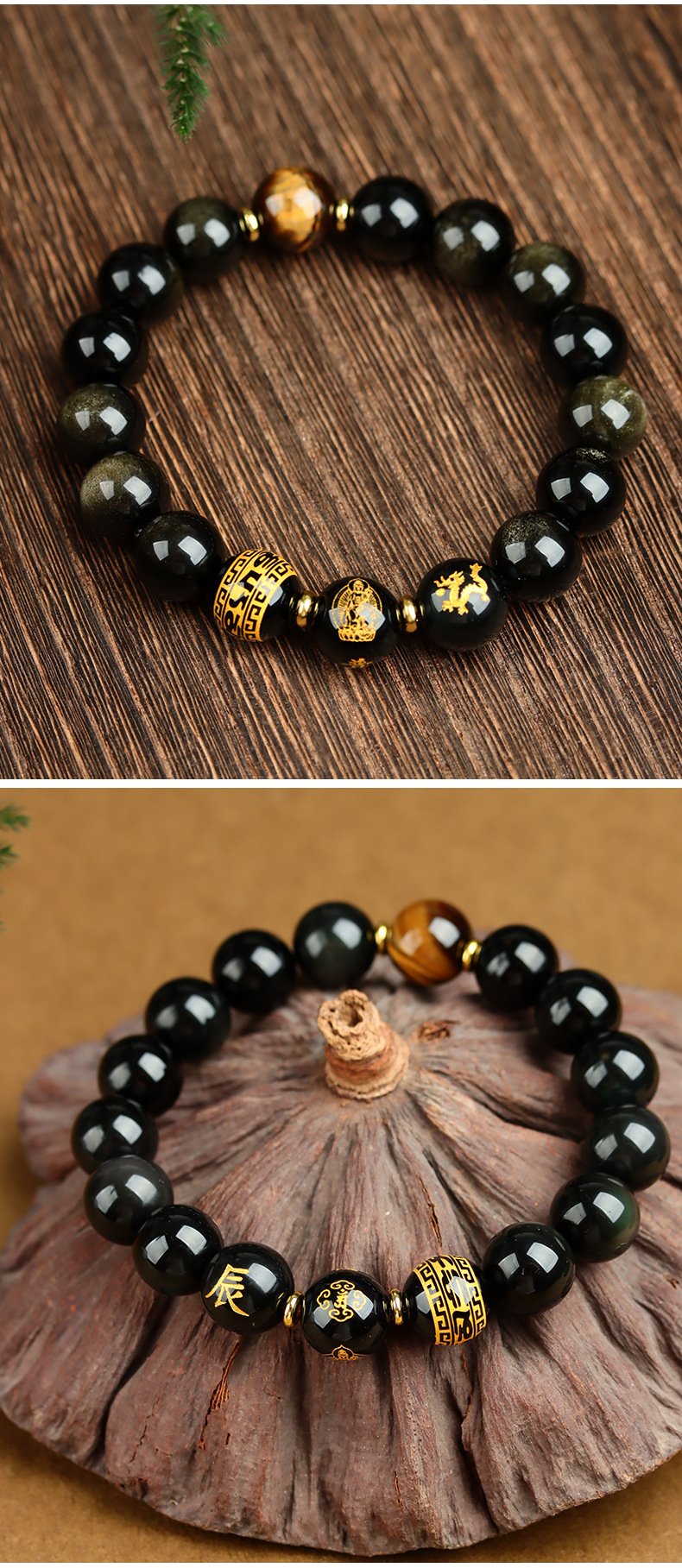
Tibetan Buddhist bracelets are renowned for their bold and vibrant visual impact. They present a rich and elaborate combination of colors, textures, and materials. The use of bright colors like red, blue, green, and yellow, along with precious gemstones and metals, gives these bracelets a sense of opulence and grandiosity. The overall design is more flamboyant compared to Han – Chinese bracelets, making a strong visual statement.
Assembly and Attachment Styles
Tibetan Buddhist bracelets are typically strung on a sturdy cord, often made of leather or a thick fabric. The beads are spaced out, with larger spacer beads or decorative elements placed between them. This arrangement creates an open and three – dimensional look. The ends of the bracelet are often adorned with intricately designed metal clasps or fittings, featuring detailed engravings of Buddhist symbols. Long tassels may be attached to the ends, adding a dynamic and dramatic element to the design.
Cultural and Religious Meanings
In Tibetan Buddhism, the bracelet is not only a tool for meditation but also a powerful amulet. Different gemstones and colors are believed to be associated with specific deities. For example, turquoise is linked to Chenrezig, the bodhisattva of compassion. Wearing a bracelet with turquoise beads is thought to invite Chenrezig’s blessings and protection. Coral, especially red coral, is associated with Amitabha Buddha, and lapis lazuli is connected to Manjushri, the bodhisattva of wisdom.
During religious rituals, the bracelet plays a crucial role. Monks and practitioners use it to count mantras, with each bead representing a repetition of the sacred words. The bracelet is believed to have the power to ward off negative energies and bring good fortune.
Materials and Bead Characteristics
Gemstones
Gemstones are a defining feature of Tibetan Buddhist bracelets. Turquoise is one of the most commonly used gemstones. Its beautiful blue – green color and spiritual significance make it highly valued. Coral, especially red coral, is also popular, believed to enhance spiritual energy and protect against evil. Lapis lazuli, with its deep blue color, is associated with wisdom and is thought to help the wearer gain spiritual insight. Other gemstones like amber, carnelian, and turquoise – colored glass are also used, each contributing to the bracelet’s unique look and spiritual properties.
Gemstones are a defining feature of Tibetan Buddhist bracelets. Turquoise is one of the most commonly used gemstones. Its beautiful blue – green color and spiritual significance make it highly valued. Coral, especially red coral, is also popular, believed to enhance spiritual energy and protect against evil. Lapis lazuli, with its deep blue color, is associated with wisdom and is thought to help the wearer gain spiritual insight. Other gemstones like amber, carnelian, and turquoise – colored glass are also used, each contributing to the bracelet’s unique look and spiritual properties.
Metals
Metals such as silver and gold play an important role in Tibetan Buddhist bracelets. They are used to create beads, spacers, and decorative elements. These metal components are often intricately engraved with Buddhist symbols, such as the eight auspicious signs, which include the wheel of dharma, the conch shell, the umbrella, the victory banner, the lotus flower, the vase, the fish, and the endless knot. The engravings not only add to the bracelet’s beauty but also enhance its spiritual significance.
Metals such as silver and gold play an important role in Tibetan Buddhist bracelets. They are used to create beads, spacers, and decorative elements. These metal components are often intricately engraved with Buddhist symbols, such as the eight auspicious signs, which include the wheel of dharma, the conch shell, the umbrella, the victory banner, the lotus flower, the vase, the fish, and the endless knot. The engravings not only add to the bracelet’s beauty but also enhance its spiritual significance.
Design Elements and Patterns
Mandala – Inspired Patterns
Many Tibetan Buddhist bracelet designs draw inspiration from mandalas, the sacred geometric diagrams in Tibetan Buddhism that represent the universe and the path to enlightenment. Circular or square patterns, with intricate details and symbols, are common. These patterns are created using a combination of different – colored beads and metal elements, resulting in a visually stunning and harmonious design that reflects the complexity and profundity of Tibetan Buddhist teachings.
Many Tibetan Buddhist bracelet designs draw inspiration from mandalas, the sacred geometric diagrams in Tibetan Buddhism that represent the universe and the path to enlightenment. Circular or square patterns, with intricate details and symbols, are common. These patterns are created using a combination of different – colored beads and metal elements, resulting in a visually stunning and harmonious design that reflects the complexity and profundity of Tibetan Buddhist teachings.
Symbolic Element Combinations
Tibetan bracelets often feature combinations of symbolic elements. A central bead may be engraved with an image of a Buddha or bodhisattva, surrounded by gemstone beads and metal spacers with engraved Buddhist symbols. The arrangement of these elements is based on Tibetan Buddhist symbolism and is believed to create a powerful spiritual energy that benefits the wearer.
Tibetan bracelets often feature combinations of symbolic elements. A central bead may be engraved with an image of a Buddha or bodhisattva, surrounded by gemstone beads and metal spacers with engraved Buddhist symbols. The arrangement of these elements is based on Tibetan Buddhist symbolism and is believed to create a powerful spiritual energy that benefits the wearer.
4. Theravada Buddhist Bracelets
Aesthetic Appeal of Simplicity
Theravada Buddhist bracelets are characterized by a simple and natural aesthetic. They have a rustic and unadorned appearance, with a focus on the natural materials and a minimalist design. The beads are usually small and of a basic shape, and the color palette is dominated by earthy and muted tones, reflecting the close connection to nature emphasized in Theravada Buddhism.
Construction Details
Theravada Buddhist bracelets are typically strung on a simple, natural cord, such as a vine or a plant – based fiber. The beads are strung closely together, creating a compact and solid feel. There are usually no elaborate clasps or decorative elements at the ends. Instead, the bracelet is often tied in a simple knot that can be adjusted to fit the wrist. The simplicity of the construction reflects the Theravada emphasis on simplicity and self – discipline in spiritual practice.
Cultural and Religious Significance
In Theravada Buddhism, the bracelet is primarily a tool for cultivating mindfulness. The act of using the beads to count mantras helps the practitioner focus the mind and stay present in the moment. The simplicity of the bracelet aligns with the Theravada principle of non – attachment to material possessions, as the focus is on the inner spiritual journey rather than on elaborate adornments. The bracelet serves as a constant reminder of the Buddha’s teachings and the path to liberation.
Materials and Bead Features
Seeds and Nuts
Seeds and nuts are commonly used materials for Theravada Buddhist bracelets. Bodhi seeds, which come from the bodhi tree, are a popular choice. These seeds are small, hard, and have a natural texture. They are believed to have a special connection to the Buddha’s enlightenment. Other seeds like rudraksha seeds are also used, as they are thought to possess spiritual and healing properties.
Seeds and nuts are commonly used materials for Theravada Buddhist bracelets. Bodhi seeds, which come from the bodhi tree, are a popular choice. These seeds are small, hard, and have a natural texture. They are believed to have a special connection to the Buddha’s enlightenment. Other seeds like rudraksha seeds are also used, as they are thought to possess spiritual and healing properties.
Wood and Bamboo
Wood and bamboo are also frequently used in Theravada Buddhist bracelets. Bamboo beads are lightweight and have a natural, earthy look. They are easy to carve, and some may have simple engravings of Buddhist symbols. Wood beads, such as those made from local hardwoods, are often left in their natural state, with a simple polish to enhance their texture.
Wood and bamboo are also frequently used in Theravada Buddhist bracelets. Bamboo beads are lightweight and have a natural, earthy look. They are easy to carve, and some may have simple engravings of Buddhist symbols. Wood beads, such as those made from local hardwoods, are often left in their natural state, with a simple polish to enhance their texture.
Design Styles and Expressions
Natural and Unadorned
Most Theravada Buddhist bracelets have a natural and unadorned design. They are typically made of a single type of material, such as bodhi seeds or bamboo beads. The lack of complex patterns or multiple materials reflects the Theravada’s emphasis on simplicity and the direct connection to nature. The natural beauty of the materials is allowed to shine through without any unnecessary embellishments.
Most Theravada Buddhist bracelets have a natural and unadorned design. They are typically made of a single type of material, such as bodhi seeds or bamboo beads. The lack of complex patterns or multiple materials reflects the Theravada’s emphasis on simplicity and the direct connection to nature. The natural beauty of the materials is allowed to shine through without any unnecessary embellishments.
Subtle Symbolic Expressions
Some Theravada bracelets may feature subtle symbolic expressions. For example, a bamboo bead may have a simple engraving of a Dharma wheel or a lotus flower. These engravings are not elaborate but are sufficient to remind the wearer of the Buddhist teachings. The subtlety of these symbolic expressions is in line with the Theravada’s understated approach to spiritual practice.
Some Theravada bracelets may feature subtle symbolic expressions. For example, a bamboo bead may have a simple engraving of a Dharma wheel or a lotus flower. These engravings are not elaborate but are sufficient to remind the wearer of the Buddhist teachings. The subtlety of these symbolic expressions is in line with the Theravada’s understated approach to spiritual practice.
5. Comparative Analysis among the Three Traditions
Aesthetic Contrasts
The aesthetic differences among the three traditions’ bracelets are quite pronounced. Han – Chinese Buddhist bracelets exhibit an elegance and simplicity, with a harmonious color palette and a focus on proportion. Tibetan Buddhist bracelets, on the other hand, are bold and elaborate, with a riot of colors, gemstones, and metalwork. Theravada Buddhist bracelets have a rustic and natural aesthetic, emphasizing simplicity and the beauty of natural materials.
Material – Based Distinctions
Han – Chinese bracelets commonly use wood, jade, and other stones. Tibetan bracelets are known for their use of precious gemstones and metals. Theravada bracelets mainly rely on seeds, nuts, wood, and bamboo. These material choices are influenced by the availability of resources in the respective regions, as well as the cultural and religious preferences of each tradition.
Significance Variations
The religious significance of the bracelets also varies. In Han – Chinese Buddhism, the bracelet is mainly a tool for spiritual cultivation and merit – making. In Tibetan Buddhism, it is a powerful amulet and a means of connecting with deities. In Theravada Buddhism, the bracelet is a tool for mindfulness and a reminder of the path to liberation.
6. Choosing a Buddhist Bracelet According to Tradition
Considerations for Han – Chinese Bracelets
When choosing a Han – Chinese Buddhist bracelet, consider your personal style and the occasion of wear. If you prefer a traditional look, opt for bracelets made of sandalwood or jade. Pay attention to the quality of the beads, the smoothness of the stringing, and the craftsmanship of any additional elements. If you like a more contemporary look, explore designs that blend traditional and modern elements.
Factors for Tibetan Bracelets
For Tibetan Buddhist bracelets, consider the gemstones and their associated spiritual meanings. If you feel a connection to a particular deity, choose a bracelet with gemstones associated with that deity. Examine the quality of the gemstones, the intricacy of the metal engravings, and the overall design. Since Tibetan bracelets are more elaborate, make sure the design suits your lifestyle.
Points for Theravada Bracelets
When selecting a Theravada Buddhist bracelet, focus on the natural materials and the simplicity of the design. Consider the texture and quality of the seeds, nuts, wood, or bamboo. Look for any subtle symbolic engravings that add to the spiritual significance. The simplicity of Theravada bracelets makes them suitable for those who prefer a more understated and natural style.
7. Maintenance and Care of Buddhist Bracelets
Han – Chinese Bracelets
For Han – Chinese bracelets made of wood, avoid excessive moisture as it can cause warping or loss of fragrance. Clean with a soft, dry cloth. For jade and stone bracelets, use a mild soap solution and a soft brush. Avoid contact with harsh chemicals. Store them separately to prevent scratching.
Tibetan Bracelets
Tibetan bracelets with gemstones need special care. Gemstones like turquoise are porous, so avoid contact with perfumes, lotions, and chemicals. Clean with a soft, damp cloth. Metal elements may tarnish; use a metal – cleaning cloth to restore shine. Store in a soft pouch or jewelry box.
Theravada Bracelets
Theravada bracelets made of seeds, nuts, wood, or bamboo should be kept dry to prevent rotting or mold. Gently clean with a soft brush if needed. Store in a cool, dry place away from extreme temperatures.
8. Conclusion
The bracelets of the Han – Chinese, Tibetan, and Theravada Buddhist traditions are a testament to the rich diversity within Buddhism. Each style, with its unique aesthetic, materials, and religious significance, offers a window into the distinct cultural and spiritual worlds of these traditions. Whether one is drawn to the elegance of Han – Chinese bracelets, the boldness of Tibetan bracelets, or the simplicity of Theravada bracelets, these spiritual accessories serve as powerful reminders of the Buddhist path. By understanding and respecting these differences, we can not only appreciate the beauty of these bracelets but also gain a deeper understanding of the profound teachings of Buddhism.
9. FAQs
Can non – Buddhists wear Buddhist bracelets?
Yes, non – Buddhists can wear Buddhist bracelets. While they hold religious significance for Buddhists, many people wear them for their aesthetic appeal, cultural interest, or as symbols of peace and positive energy. However, it’s important to approach them with respect for their religious and cultural context.
How can I tell if the gemstones in a Tibetan bracelet are genuine?
Look for natural inclusions in gemstones like turquoise and lapis lazuli. Certifications from reliable gemological laboratories can also verify authenticity. Buying from reputable sellers who can provide guarantees is advisable.
Can I use a Theravada bracelet for meditation if I follow a different Buddhist tradition?
Yes, the basic function of using a bracelet to count mantras and aid concentration can be applied across different Buddhist practices. However, be aware of and respect the unique cultural and religious significance of each tradition.
Are Han – Chinese Buddhist bracelets gender – specific?
No, Han – Chinese Buddhist bracelets are not gender – specific. There are designs suitable for both men and women, with some being more delicate for women and others more robust for men, but there are no strict rules.
How often should I clean my Buddhist bracelet?
The frequency of cleaning depends on the material. Wood – based Han – Chinese bracelets may need cleaning once a month or as needed. Gemstone – rich Tibetan bracelets may be cleaned every few weeks. Theravada bracelets made of natural materials can be cleaned as soon as dust or dirt is noticed.
Keywords: Buddhist bracelets, Han – Chinese Buddhism, Tibetan Buddhism, Theravada Buddhism, bracelet styles