
可转动.jpg)
可转动.jpg)
可转动.jpg)
可转动.jpg)
可转动.jpg)
可转动.jpg)
可转动.jpg)
可转动.jpg)
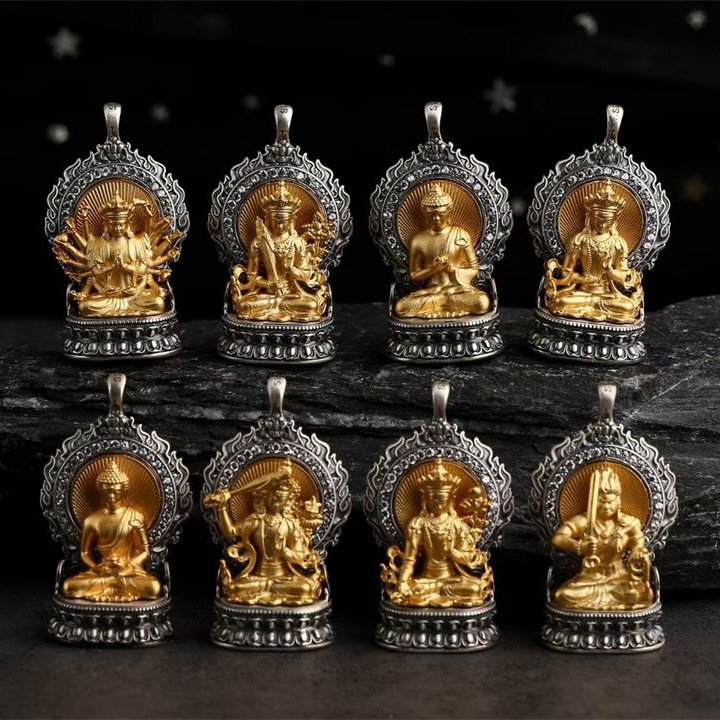
Buddha jewelry:Chinese Zodiac’s Eight Great Guardian Deities and Birth Buddhas, Gau Box, Yellow Jambhala, Zaki Ram Pendant
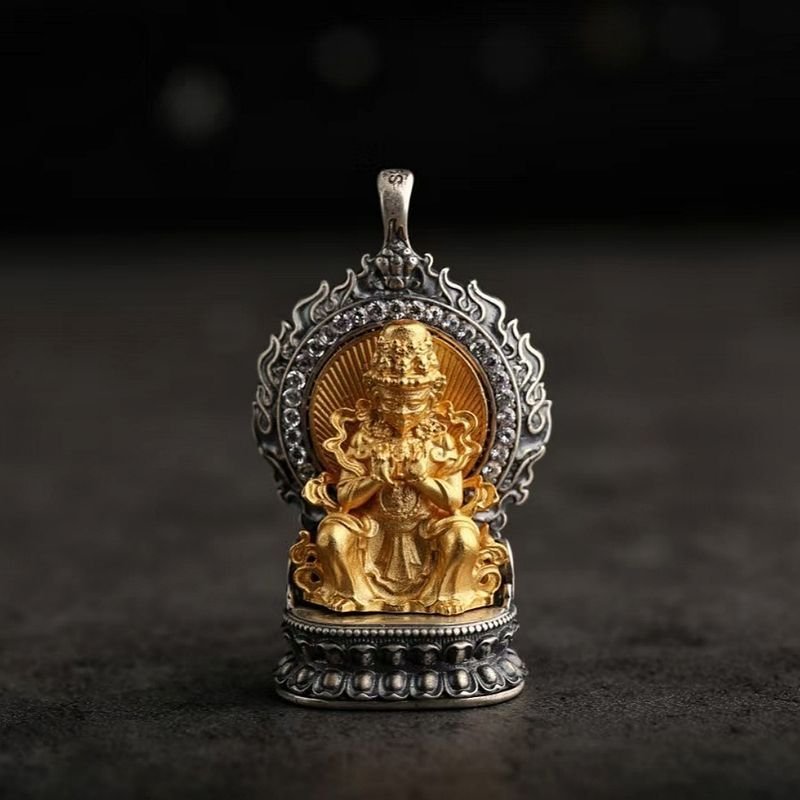
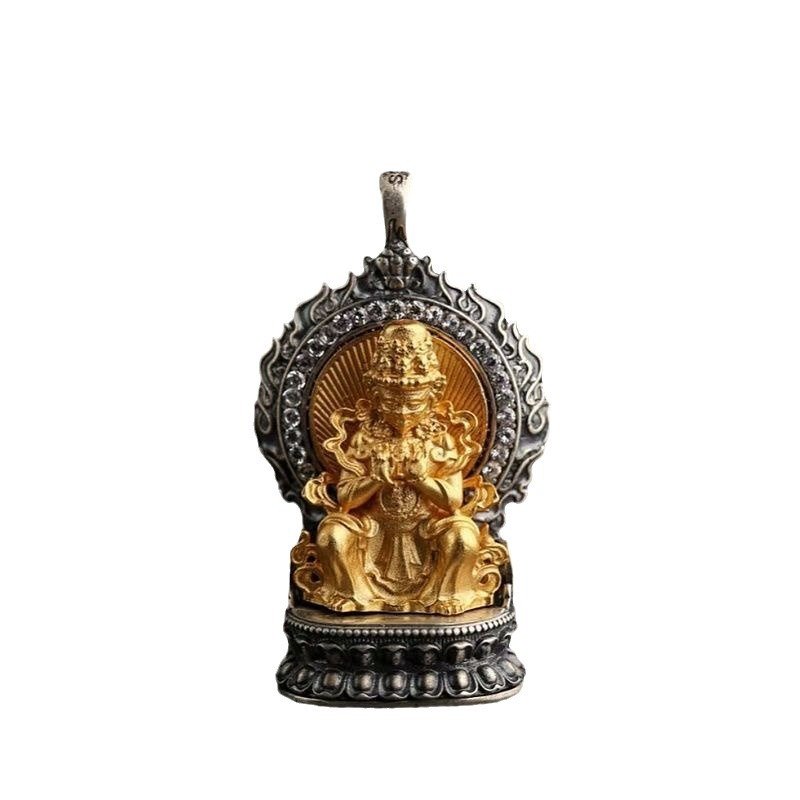
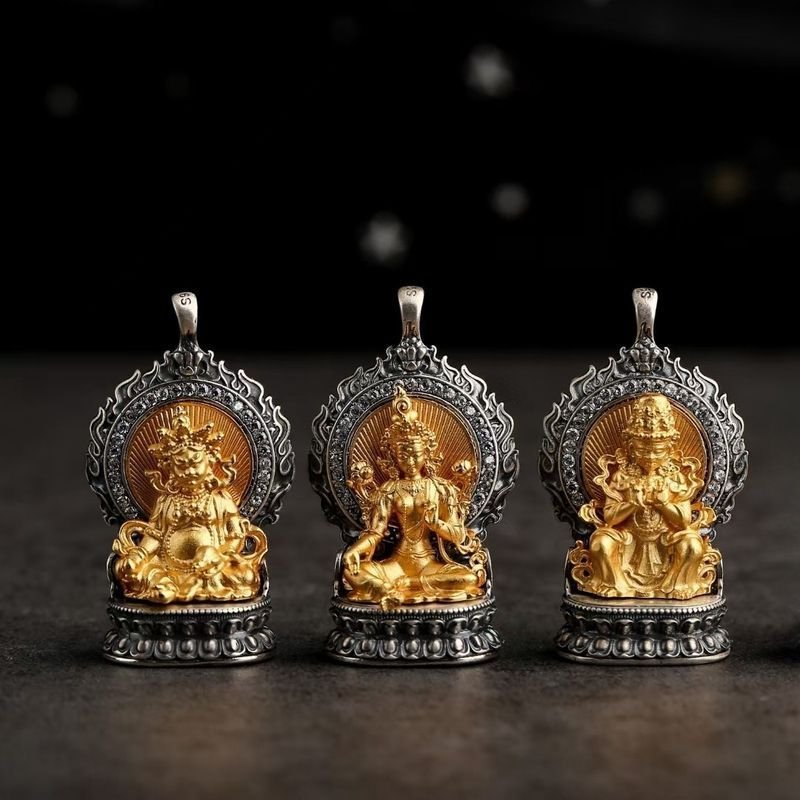
The realm of spiritual jewelry encompassing the Chinese Zodiac’s Eight Great Guardian Deities, Birth Buddhas, Gau Box, Yellow Jambhala, Zaki Ram Pendant, Zhaki – Tibetan – style Buddha Amulet, Green Tara – Tibetan – style Buddha Amulet, and Four – Armed Avalokiteshvara – Tibetan – style Buddha Amulet is a rich tapestry woven from cultural symbolism, religious significance, and exquisite artistic craftsmanship. Each element carries profound meaning, rendering these pieces far more than mere accessories—they stand as tangible expressions of faith, protection, and cultural heritage.
Chinese Zodiac’s Eight Great Guardian Deities and Birth Buddhas
In Chinese Buddhist tradition, each zodiac sign is closely linked to an Eight Great Guardian Deity and a Birth Buddha, both believed to bestow protection, guidance, and blessings throughout one’s lifetime. These divine figures are deeply interwoven with the zodiac, forging a personal spiritual bond for individuals based on their birth year.
For example, those born in the Year of the Rat are under the guardianship of Vaishravana, the Guardian of the North, with Sakyamuni Buddha as their Birth Buddha. The Ox and Tiger are protected by Manjushri, the Bodhisattva of Wisdom, and their Birth Buddha is Amitabha Buddha. Each deity and Buddha boasts distinct attributes and iconography that are masterfully reflected in the jewelry. Manjushri, often depicted wielding a sword to slash through ignorance and clutching a book of wisdom, symbolizes the relentless pursuit of knowledge and enlightenment. Vaishravana, portrayed with a treasure vase, embodies wealth and protective power.
Jewelry featuring these figures frequently showcases intricate carvings or engravings on metals such as silver, copper, or gold. The details are rendered with meticulous precision, from the delicate folds of their robes to the nuanced expressions on their faces, capturing the very essence of their divine roles. Wearing such jewelry is regarded as a means to invoke the blessings of these guardians and Buddhas, serving as a constant reminder for the wearer to embody their virtues—wisdom, compassion, strength, and generosity.
Gau Box
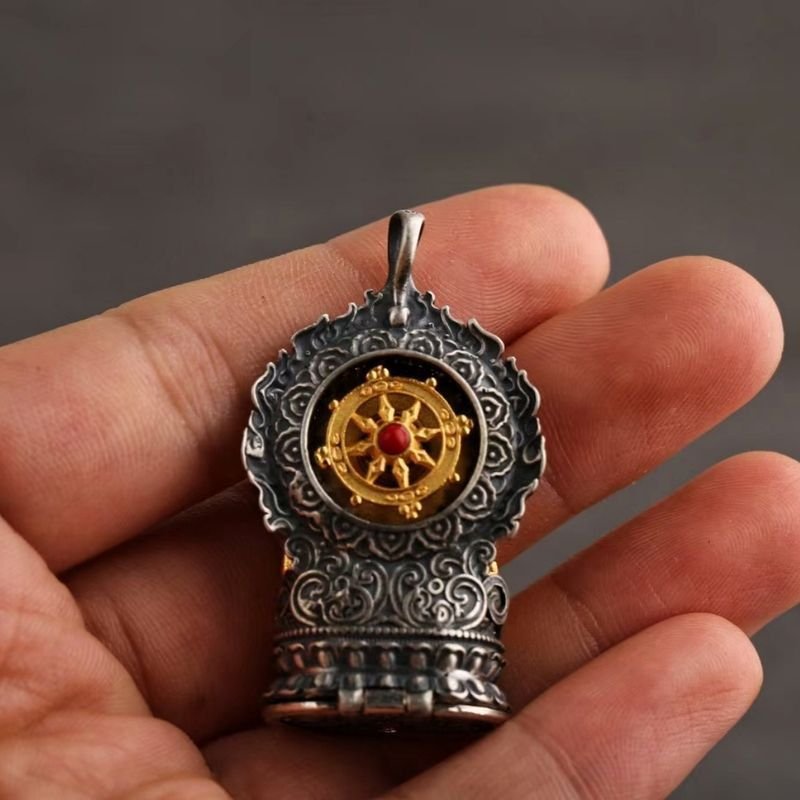
The Gau Box, a traditional Tibetan Buddhist container, holds an esteemed position in spiritual jewelry. These small, often elaborately decorated boxes are designed to house sacred items like mantras, prayer scrolls, relics, or blessed objects. The belief is that the Gau Box carries the spiritual energy of its contents, offering protection and spiritual nourishment to the wearer.
Crafted with immense care, Gau Boxes come in various shapes, typically circular or rectangular, and are adorned with intricate engravings. Common motifs include lotus flowers, symbolizing purity; endless knots, representing the interconnectedness of all existence; and mantras like “Om Mani Padme Hum,” believed to bring good fortune. The boxes are usually crafted from metals, with silver being a popular choice for its radiant luster and symbolic association with purity. Some Gau Boxes feature a vintage or oxidized finish, enhancing their sense of antiquity and spiritual gravitas.
Wearing a Gau Box pendant allows the wearer to keep their faith close to the heart, fostering an unbroken connection to the sacred. It serves as a poignant reminder of one’s spiritual journey and the ever – present embrace of divine protection.
Yellow Jambhala
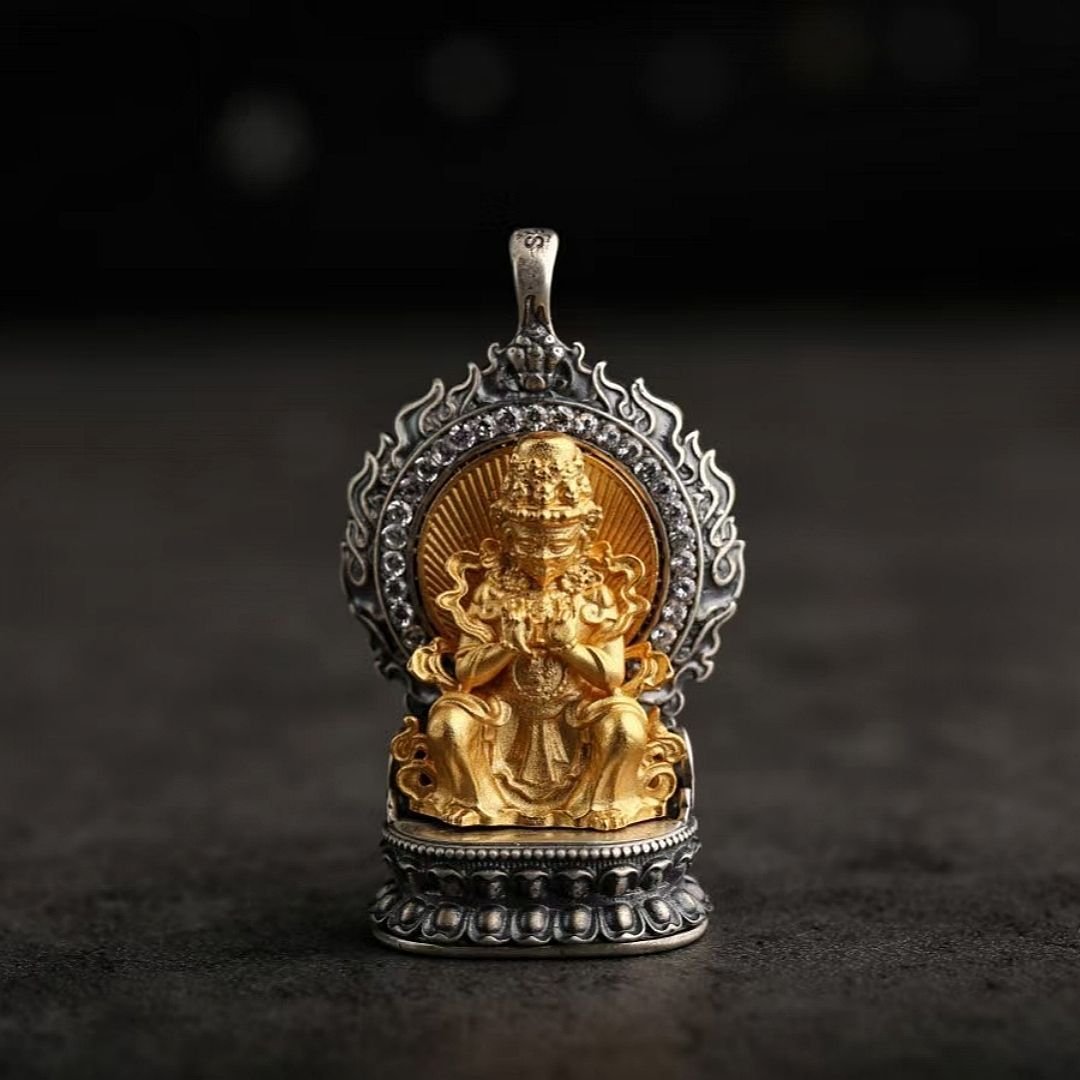
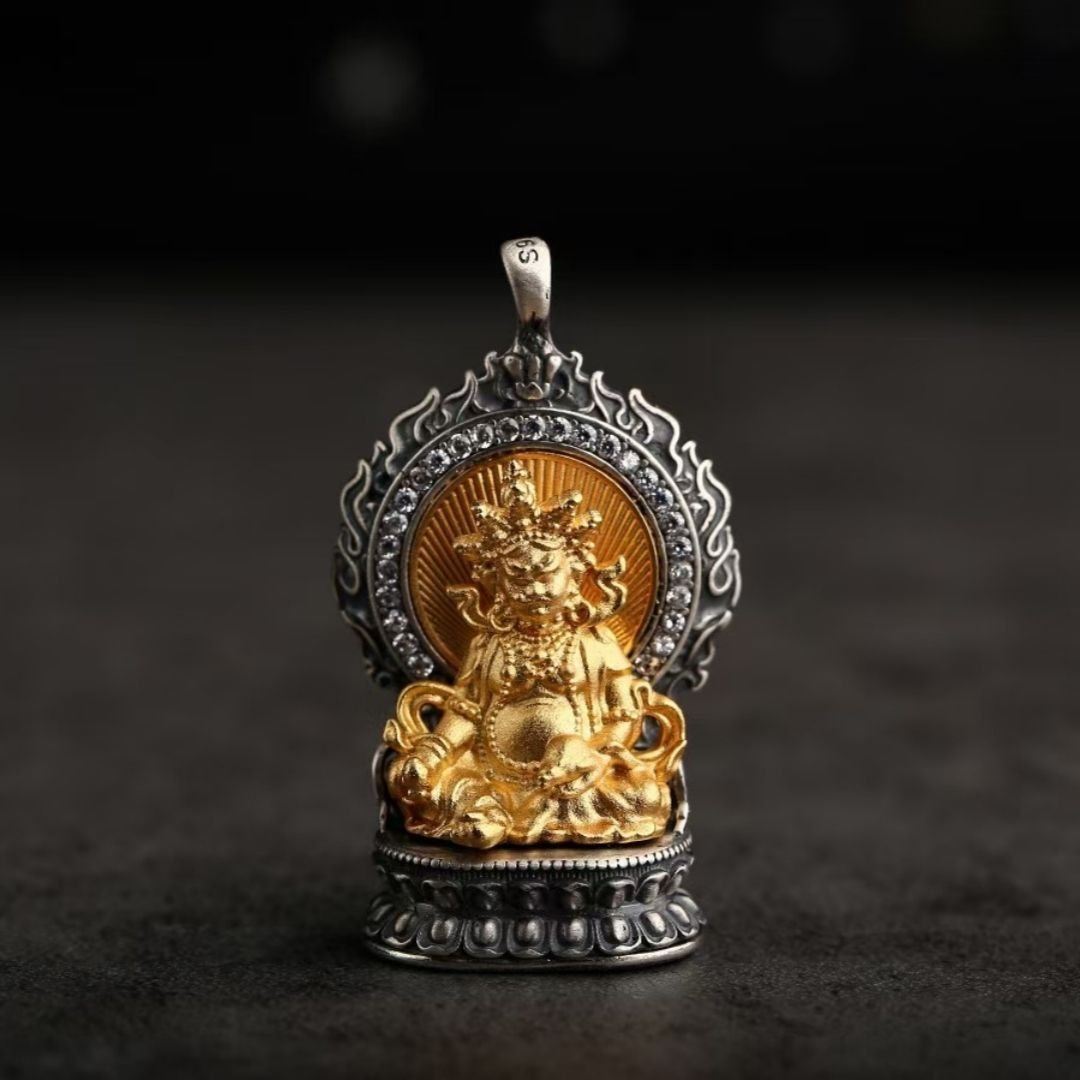
Yellow Jambhala, revered as the God of Wealth in Buddhist tradition, is a beloved figure in spiritual jewelry. He is depicted as a plump, smiling deity holding a mongoose that spits out jewels and a citron fruit—symbols of abundant prosperity. Yellow Jambhala is associated not only with material wealth but also with spiritual richness, emphasizing the significance of generosity and sharing.
Jewelry featuring Yellow Jambhala often captures his joyful and benevolent essence. The pendants or charms are typically crafted from metals like gold, brass, or copper, which amplify his connection to wealth. The craftsmanship details are striking—from the intricate patterns on his robes to the playful warmth in his expression. Some pieces may also incorporate additional symbols of prosperity, such as coins or treasure vases.
Wearing a Yellow Jambhala pendant is believed to attract good fortune, clear obstacles to wealth, and inspire a generous spirit. It serves as a gentle reminder that true prosperity stems from a balanced heart and a willingness to share with others.
Zaki Ram Pendant
Zaki Ram, also known as Palden Lhamo, is a venerated female deity in Tibetan Buddhism, particularly renowned for protection and the removal of obstacles. She is often portrayed with a fierce expression, symbolizing her power to conquer negativity, and is accompanied by various symbols—a sow, representing wisdom, and a cup of blood, signifying the transformation of negative energies into positive ones.
Zaki Ram pendants are crafted with meticulous attention to detail, capturing her powerful and dynamic presence. The deity’s features are intricately carved, with her eyes wide open to pierce through ignorance and her posture exuding unwavering strength. The pendants are typically made from metals like silver or copper, with some featuring gemstone inlays that enhance both their visual allure and spiritual significance.
Wearing a Zaki Ram pendant is believed to offer protection from harm, ward off evil spirits, and instill the courage to face life’s challenges. It stands as a symbol of female empowerment and spiritual fortitude, reminding the wearer of their inherent resilience.
Zhaki – Tibetan – style Buddha Amulet
The Zhaki – Tibetan – style Buddha Amulet, centered around the figure of Zhaki (Zaki Ram), is a cherished item in Tibetan – influenced spiritual jewelry. As a manifestation of the powerful female deity, the amulet is designed to encapsulate her protective and benevolent qualities. The amulet often depicts Zhaki in her characteristic form—with a fierce yet compassionate visage, her black – hued skin symbolizing the absorption of negative energies, and her wide – open eyes that pierce through the veils of ignorance. Her long, outstretched tongue, a result of past poisoning in some legends, and her chicken – like feet are carefully rendered, each detail carrying the weight of her mythos.
Crafted from materials such as metal, often silver or bronze, the amulet may feature inscriptions of mantras or sacred symbols around the perimeter. These inscriptions, like the potent “Om Mani Padme Hum,” are believed to enhance the amulet’s spiritual potency, creating a shield of positive energy around the wearer. The amulet is usually small enough to be carried in a pocket or worn as a pendant, allowing the devotee to keep Zhaki’s protection close at all times. It is seen as a powerful talisman for those seeking to overcome obstacles, whether in business, health, or personal relationships, and is especially popular among those who resonate with Zhaki’s story of transformation from a wronged soul to a revered protector.
Green Tara – Tibetan – style Buddha Amulet
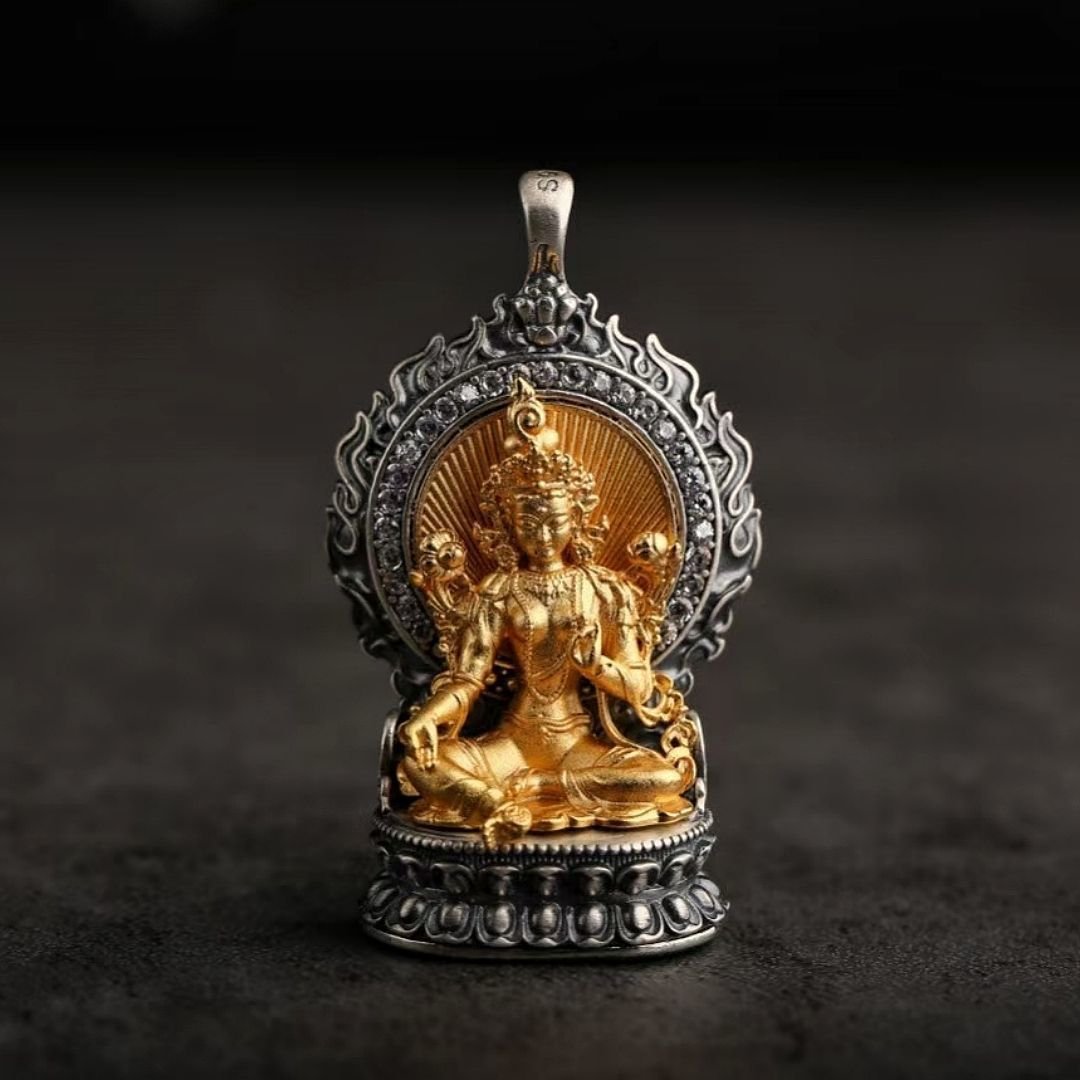
The Green Tara, an iconic figure in Tibetan Buddhism, is the subject of the Green Tara – Tibetan – style Buddha Amulet. Representing compassion, healing, and protection, the Green Tara is often depicted as a graceful, green – hued goddess seated in a meditative pose or standing with one foot slightly forward, ready to spring into action to aid those in need. Her image on the amulet is rendered with great care, with her almond – shaped eyes exuding kindness and her hands in various mudras (symbolic hand gestures). One hand may hold a blooming lotus flower, which represents purity and the unfolding of spiritual enlightenment, while the other may be in the gesture of granting refuge, signifying her willingness to offer protection to all beings.
These amulets are typically crafted from materials like stone, such as turquoise or lapis lazuli, which are associated with spiritual qualities in Tibetan culture, or from metals like gold – plated copper. The surface of the amulet may be intricately engraved with additional symbols, such as the Eight Auspicious Symbols (the wheel of Dharma, conch shell, umbrella, victory banner, lotus, vase, endless knot, and fish), which further enhance its spiritual significance. Wearing a Green Tara amulet is believed to invoke her gentle yet powerful presence, bringing about emotional healing, protection from harm, and the cultivation of compassion in the wearer’s heart. It is a source of comfort and inspiration for those on a spiritual path, as well as for those facing difficult times in their lives.
Four – Armed Avalokiteshvara – Tibetan – style Buddha Amulet
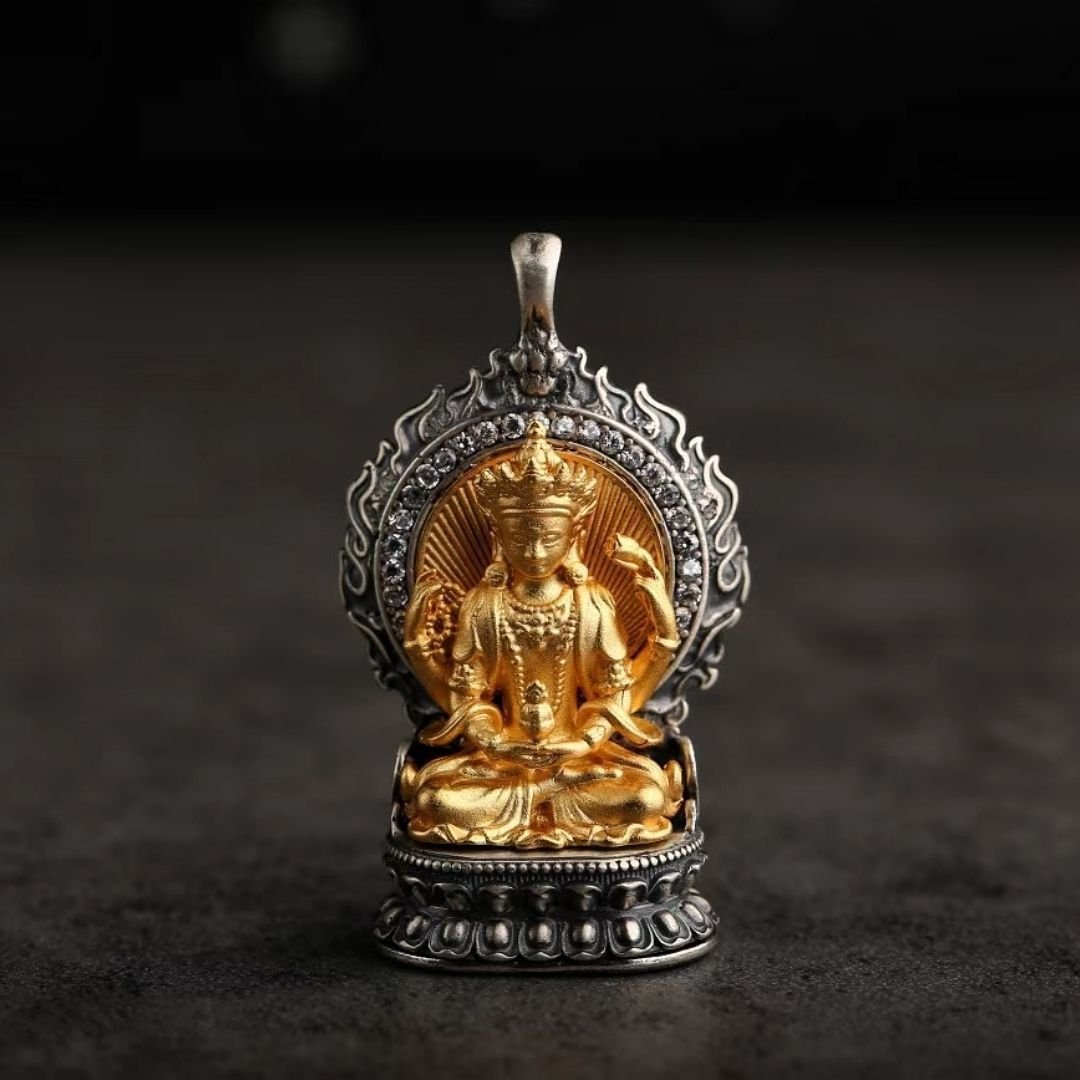
The Four – Armed Avalokiteshvara – Tibetan – style Buddha Amulet features one of the most revered Bodhisattvas in Buddhism. Avalokiteshvara, the Bodhisattva of Compassion, is depicted with four arms in this representation, each arm holding a symbolic item. Two of the arms are often in the prayer – like position at the heart, while the other two hold a crystal rosary, symbolizing the counting of mantras for the benefit of all sentient beings, and a lotus flower, representing purity and spiritual growth. The face of the Four – Armed Avalokiteshvara on the amulet is serene, with a gentle smile that conveys boundless compassion.
These amulets are crafted with precision, using materials such as precious metals like silver or gold, or high – quality alloys. The details of the Bodhisattva’s robes, the folds carefully carved to give a sense of movement and fluidity, and the expressions on his face are all executed with great artistry. Some amulets may also incorporate gemstones, such as rubies or emeralds, set at strategic points to enhance the aesthetic and spiritual value. Wearing a Four – Armed Avalokiteshvara amulet is seen as a way to invite the compassionate energy of the Bodhisattva into one’s life. It is believed to help the wearer develop greater empathy, kindness, and the ability to relieve the suffering of others, while also providing personal protection and spiritual guidance.


-300x300.jpg)
Ella –
This gau box pendant is packed with meaningful details and stunning craftsmanship! The Chinese zodiac engravings are clear, and each sign is paired with its corresponding Eight Great Guardian Deity and Birth Buddha¡ªsuch a thoughtful design. The Yellow Jambhala and Zaki Ram accents add even more spiritual depth, and the gau box itself is well-made, with a smooth finish. The pendant is the perfect size for a necklace, not too bulky, and the chain is comfortable to wear all day. I¡¯ve worn it every day since I got it, and it still looks brand new¡ªno scratches, no fading. It¡¯s a unique piece that combines so many beloved symbols, and I get compliments on it everywhere I go.