
The Warmth of Hand - Carved Buddhist Jewelry: How Artisans Convey Compassion with the Carving Knife
Table of Contents
- Introduction
- The World of Hand – Carved Buddhist Jewelry
- The Artisans: Guardians of the Craft
- Materials: The Medium of Compassion
- Symbolism in Hand – Carved Buddhist Jewelry
- The Process of Hand – Carving: A Labor of Love
- Conveying Compassion through Design
- The Impact of Hand – Carved Buddhist Jewelry on Wearers
- Preserving the Tradition in the Modern World
- Challenges Faced by Artisans
- The Role of Hand – Carved Buddhist Jewelry in Spiritual Practice
- Caring for Hand – Carved Buddhist Jewelry
- The Market for Hand – Carved Buddhist Jewelry
- Case Studies: Inspiring Artisans and Their Works
- Conclusion
- FAQs
1. Introduction
Buddhism, with its profound teachings of compassion, mindfulness, and enlightenment, has long – influenced various forms of art. Among these, hand – carved Buddhist jewelry stands out as a unique and deeply spiritual expression. It is not merely an adornment but a medium through which artisans convey the essence of Buddhist philosophy, particularly the powerful concept of compassion. In this blog, we will explore the world of hand – carved Buddhist jewelry, delving into how artisans use their 刻刀 (carving knives) to infuse each piece with a sense of warmth and spiritual significance.
2. The World of Hand – Carved Buddhist Jewelry
Hand – carved Buddhist jewelry encompasses a wide range of items, from necklaces with intricately carved pendants to bracelets, rings, and earrings. These pieces often feature Buddhist symbols, images of Buddhas or bodhisattvas, and other elements inspired by Buddhist teachings. The artistry involved in creating these jewelry items is a blend of technical skill and spiritual devotion. Each piece is unique, bearing the mark of the artisan’s individual touch, and is intended to carry and transmit the positive energy and spiritual values associated with Buddhism.
3. The Artisans: Guardians of the Craft
A. Skill and Training
The artisans who create hand – carved Buddhist jewelry are highly skilled craftsmen and women. Many of them learn their trade through long – standing apprenticeships, often passed down through generations. They spend years honing their skills in handling the carving knife, learning to control the pressure, angle, and depth of each cut. They study the nuances of different materials, understanding how each responds to the carving process. For example, working with wood requires a different approach compared to stone or bone.
B. Spiritual Connection
Beyond technical proficiency, these artisans have a deep spiritual connection to Buddhism. Their understanding of Buddhist teachings and philosophy serves as the driving force behind their creations. They see their work as a form of spiritual practice, a way to express their devotion and to share the message of compassion with the world. This spiritual connection is evident in the care and attention they give to each piece, as if they are not just creating jewelry but a vessel for spiritual energy.
4. Materials: The Medium of Compassion
A. Wood
Wood is a popular material in hand – carved Buddhist jewelry. Different types of wood, such as sandalwood, are chosen not only for their workability but also for their cultural and spiritual significance. Sandalwood, for instance, has a pleasant fragrance that is believed to enhance the meditative state. Its soft texture allows artisans to create fine details, whether it’s the gentle folds of a Buddha’s robe or the intricate patterns on a bodhi leaf. The natural grain of the wood adds an organic and earthy element to the jewelry, symbolizing the connection between the spiritual and the natural world.
B. Stone
Stones like jade, agate, and marble are also commonly used. Jade, especially, holds great significance in many Asian cultures. It is associated with purity, virtue, and longevity. When carved into Buddhist jewelry, jade becomes a powerful medium for expressing compassion. The hardness of the stone requires the artisan to have precise control over the carving knife. The smooth and polished surface of the carved jade, combined with the detailed imagery, can evoke a sense of tranquility and spiritual depth.
C. Bone and Ivory (Ethical Considerations)
In the past, bone and ivory were used in hand – carved Buddhist jewelry. However, with increasing awareness of ethical issues, especially regarding ivory and the protection of endangered species, the use of ivory has significantly declined. Bone, on the other hand, still finds its place in some traditional carvings. It offers a unique texture and color, and its relatively soft nature allows for detailed carving. Artisans who use bone often source it from ethical and sustainable channels.
5. Symbolism in Hand – Carved Buddhist Jewelry
A. The Lotus Flower
The lotus flower is one of the most prominent symbols in hand – carved Buddhist jewelry. It represents purity, enlightenment, and the ability to rise above the mud of worldly suffering. When carved, the delicate petals of the lotus are often depicted in fine detail, symbolizing the gradual unfolding of the spiritual self. The lotus may be shown in various stages, from a closed bud to a fully bloomed flower, each representing a different stage of spiritual growth.
B. The Buddha Image
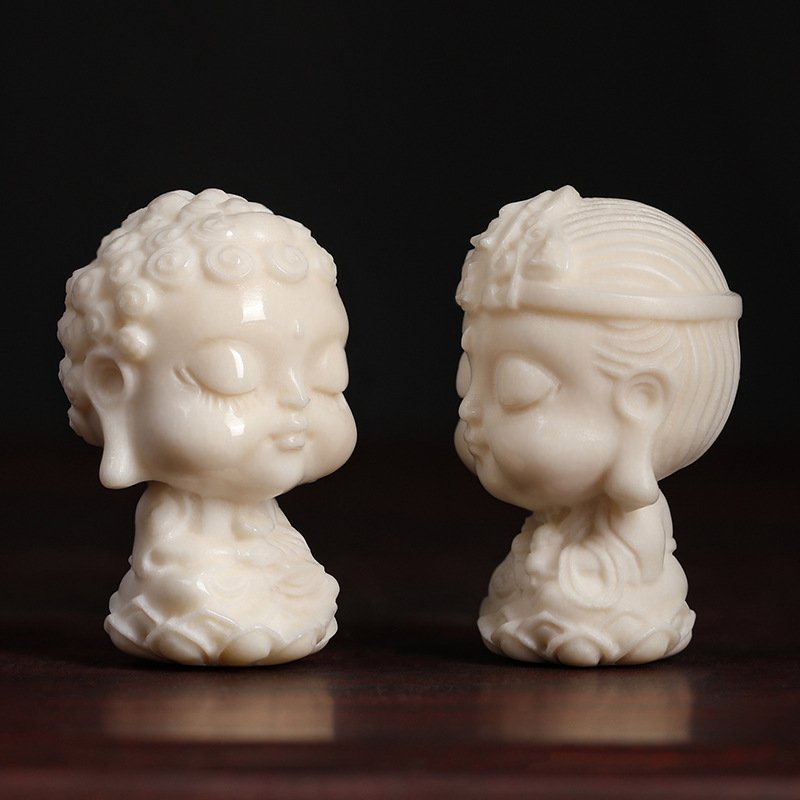
Images of the Buddha are a central feature in many hand – carved Buddhist jewelry pieces. The serene expression on the Buddha’s face, with half – closed eyes and a gentle smile, is intended to convey a sense of peace, wisdom, and compassion. The posture of the Buddha, such as the meditation pose or the teaching pose, also carries specific meanings. The carving of the Buddha’s image is a highly respected art form, with artisans striving to capture the essence of his spiritual presence in every detail.
C. The Dharma Wheel
The Dharma wheel is another important symbol. It represents the teachings of the Buddha, the path to enlightenment, and the continuous cycle of life and spiritual growth. When carved into jewelry, the spokes of the Dharma wheel are often carefully crafted, symbolizing the various aspects of the Buddhist path, such as the Noble Eight – fold Path.
6. The Process of Hand – Carving: A Labor of Love
A. Design Conceptualization
The process of creating hand – carved Buddhist jewelry begins with design conceptualization. The artisan draws inspiration from Buddhist teachings, scriptures, and traditional art forms. They may also consider the preferences of the client or the intended wearer. The design may start as a rough sketch on paper, where the artisan outlines the basic shape, the placement of symbols, and the overall composition of the piece.
B. Material Preparation
Once the design is finalized, the artisan prepares the material. If it’s wood, they may need to select the right piece, considering the grain direction, color, and texture. For stone, they may need to cut and shape the raw material to the appropriate size and thickness. This stage requires a good understanding of the material’s properties to ensure that it can withstand the carving process.
C. Carving
The actual carving is the most labor – intensive part of the process. Using a variety of carving knives, the artisan starts to bring the design to life. They make precise cuts, gradually removing material to create the desired shape and details. For example, when carving the face of a Buddha, they need to carefully shape the features, paying attention to the curve of the cheeks, the slope of the nose, and the expression in the eyes. Each cut is deliberate, as it contributes to the overall aesthetic and spiritual impact of the piece.
D. Finishing Touches
After the carving is complete, the artisan adds the finishing touches. This may include sanding the surface to make it smooth, polishing it to enhance the luster (especially for stones), and adding any additional details such as coloring or inlay work. The finishing touches are crucial as they can transform a rough carving into a beautiful and refined piece of jewelry.
7. Conveying Compassion through Design
A. Expressions of Serenity
One of the ways artisans convey compassion through design is by creating expressions of serenity. The calm and peaceful faces of Buddhas and bodhisattvas carved into jewelry are intended to evoke a sense of inner peace in the viewer. The gentle curves and soft lines of the carvings, whether it’s the contour of a Buddha’s robe or the shape of a lotus petal, contribute to this sense of tranquility, suggesting the peace that comes from a compassionate heart.
B. Gestures of Benevolence
Certain gestures, or mudras, are often depicted in hand – carved Buddhist jewelry. For example, the gesture of the Buddha with an open palm facing downward is known as the varada mudra, which symbolizes the granting of wishes and the bestowal of blessings. When an artisan carves this mudra into a piece of jewelry, they are not only representing a physical gesture but also the underlying spirit of compassion and benevolence.
C. Inclusion of Symbolic Scenes
Some hand – carved Buddhist jewelry pieces may include symbolic scenes from Buddhist stories. For instance, a carving of the Buddha surrounded by animals or people, showing his compassion towards all beings. These scenes are carefully crafted to tell a story of kindness, mercy, and the universality of compassion, allowing the wearer to connect with the deeper meaning of Buddhist teachings.
8. The Impact of Hand – Carved Buddhist Jewelry on Wearers
A. Spiritual Connection
For many wearers, hand – carved Buddhist jewelry serves as a tangible link to their spiritual beliefs. Wearing a piece of jewelry with a carved Buddha image or a Buddhist symbol can create a sense of closeness to the Buddha and his teachings. It can act as a reminder to practice compassion, kindness, and mindfulness in daily life. Some wearers may feel a sense of comfort and support, especially during difficult times, as if the spiritual energy of the jewelry is guiding them.
B. Aesthetic and Emotional Appeal
Beyond its spiritual significance, hand – carved Buddhist jewelry also has a strong aesthetic and emotional appeal. The beauty of the craftsmanship, the unique designs, and the use of high – quality materials make these pieces attractive as works of art. The emotional connection that wearers develop with the jewelry is often deep, as it may represent their personal spiritual journey, values, or a special moment in their lives.
9. Preserving the Tradition in the Modern World
A. Passing on the Skills
In the modern world, preserving the tradition of hand – carved Buddhist jewelry is crucial. Artisans play a key role in this by passing on their skills to the next generation. Apprenticeships are still a common way for young people to learn the craft. Older artisans teach the younger ones not only the technical aspects of carving but also the spiritual and cultural significance behind each piece. This ensures that the art form continues to thrive.
B. Incorporating Modern Elements
To keep the tradition relevant, some artisans are also incorporating modern elements into their designs. They may use contemporary jewelry – making techniques, such as new types of settings or clasps, while still maintaining the core Buddhist themes and symbols. This allows hand – carved Buddhist jewelry to appeal to a wider audience, including those who may be more accustomed to modern styles.
10. Challenges Faced by Artisans
A. Competition from Machine – Made Products
One of the biggest challenges faced by artisans is competition from machine – made Buddhist jewelry. Machine – made products can be produced in large quantities at a lower cost, making them more accessible to a wider market. However, they lack the unique touch and spiritual depth that hand – carved jewelry offers. Artisans need to find ways to promote the value of their hand – made pieces, emphasizing the craftsmanship, the time and effort invested, and the spiritual energy infused into each piece.
B. Sourcing of Materials
Another challenge is the sourcing of materials. As mentioned earlier, ethical considerations regarding materials like ivory have restricted their use. Additionally, finding high – quality and sustainable sources of wood, stone, and other materials can be difficult. Artisans need to balance the quality of the material with ethical and economic considerations.
11. The Role of Hand – Carved Buddhist Jewelry in Spiritual Practice
A. Meditation Aid
Hand – carved Buddhist jewelry can serve as an aid in meditation. The tactile experience of holding a carved bead or pendant can help the practitioner focus their mind. The visual presence of Buddhist symbols can also guide the meditation, allowing the wearer to reflect on the teachings and cultivate a deeper sense of compassion and mindfulness.
B. Offering in Rituals
In some Buddhist rituals, hand – carved Buddhist jewelry may be used as an offering. A beautifully carved Buddha statue or a piece of jewelry with sacred symbols can be presented as a gesture of respect and devotion. It is seen as a way to connect with the spiritual realm and to express one’s commitment to the Buddhist path.
12. Caring for Hand – Carved Buddhist Jewelry
A. Wood – Based Jewelry
For wood – based hand – carved Buddhist jewelry, it’s important to keep it dry. Exposure to excessive moisture can cause the wood to warp or develop mold. Regularly wipe it with a soft, dry cloth to maintain its luster. If the wood starts to lose its fragrance (in the case of sandalwood), a light application of a suitable wood oil can help restore it.
B. Stone – Based Jewelry
Stone – based jewelry, such as jade or agate, should be cleaned with a mild soap and water solution. Avoid using harsh chemicals or abrasive cleaners, as they can damage the surface of the stone. After cleaning, dry the jewelry thoroughly. Store stone – based jewelry separately from other pieces to prevent scratching.
C. Bone – Based Jewelry
Bone – based jewelry requires gentle care. Clean it with a soft, damp cloth. Avoid exposing it to direct sunlight for long periods, as this can cause the bone to discolor. Store it in a cool, dry place to prevent it from becoming brittle.
13. The Market for Hand – Carved Buddhist Jewelry
A. Local and International Demand
There is a growing market for hand – carved Buddhist jewelry, both locally in Buddhist – majority regions and internationally. In countries like Thailand, India, and China, there is a strong local demand for these pieces, often for religious and cultural reasons. Internationally, there is an increasing interest in spiritual and cultural jewelry, and hand – carved Buddhist jewelry appeals to those who are drawn to the beauty and meaning of Buddhist art.
B. Pricing and Market Trends
The pricing of hand – carved Buddhist jewelry varies depending on factors such as the material used, the complexity of the carving, and the reputation of the artisan. High – quality pieces made from precious stones or rare woods, with intricate carvings, can command high prices. Market trends show an increasing demand for unique, one – of – a – kind pieces, as well as a growing interest in sustainable and ethically sourced jewelry.
14. Case Studies: Inspiring Artisans and Their Works
A. Artisan A in Thailand
Artisan A in Thailand has been carving Buddhist jewelry for over 30 years. His work mainly focuses on using wood to create detailed Buddha statues and pendants. He sources his wood from sustainable forests and spends hours on each piece, carefully shaping the wood to capture the essence of the Buddha’s compassion. His pieces are highly sought after, not only in Thailand but also internationally, for their lifelike expressions and the spiritual energy they seem to radiate.
B. Artisan B in India
Artisan B in India specializes in carving stone jewelry, particularly using marble and agate. Her designs often incorporate a combination of traditional and modern elements. She carves intricate lotus flower patterns and Buddha images, and her use of color inlay work adds a unique touch to her pieces. Her jewelry has been featured in several international exhibitions, promoting the art of hand – carved Buddhist jewelry.
15. Conclusion
Hand – carved Buddhist jewelry is a remarkable art form that combines technical skill, spiritual devotion, and cultural heritage. Through their carving knives, artisans are able to convey the profound message of compassion, creating pieces that are not only beautiful but also spiritually meaningful. Despite the challenges they face, these artisans continue to preserve and evolve this tradition, ensuring that hand – carved Buddhist jewelry remains a powerful medium for expressing the essence of Buddhism in the modern world.
16. FAQs
Can non – Buddhists wear hand – carved Buddhist jewelry?
Yes, non – Buddhists can wear hand – carved Buddhist jewelry. While it holds deep spiritual significance for Buddhists, its aesthetic beauty and the universal message of compassion can appeal to people of all beliefs. However, it’s important to approach it with respect for its cultural and religious context.
How can I tell if a piece of hand – carved Buddhist jewelry is of high quality?
Look for details in the carving, such as smooth lines, precise shapes, and the ability of the carving to capture the essence of the symbol or image. The quality of the material also matters. High – quality materials like fine – grained wood, precious stones, or well – sourced bone contribute to the overall quality. Additionally, the reputation of the artisan can be an indicator of quality.
Are there any specific occasions to wear hand – carved Buddhist jewelry?
There are no strict rules. Some people wear it daily as a reminder of their spiritual values, while others may wear it during religious ceremonies, meditation sessions, or special occasions. It can also be worn simply for its aesthetic appeal.
How long does it take to carve a piece of Buddhist jewelry?
The time it takes to carve a piece of Buddhist jewelry varies greatly depending on the complexity of the design, the material used, and the skill of the artisan. A simple pendant may take a few hours, while a highly detailed and intricate piece could take days or even weeks to complete.
Can I commission a custom – made hand – carved Buddhist jewelry piece?
Yes, many artisans accept custom – made commissions. You can discuss your design ideas, the material you prefer, and any specific spiritual or aesthetic requirements with the artisan. They will then work with you to create a unique piece of jewelry.
Keywords: hand – carved Buddhist jewelry, artisans, compassion, carving knife, Buddhist symbolism