"Zen - inspired 留白 (Empty Space) in Buddhist Jewelry: How Minimalist Design Embraces the Concept of 'The Great Way is Simple'"
Table of Contents
- Introduction to Buddhist Jewelry and the Concept of “Zen – inspired 留白”
- The Essence of “The Great Way is Simple” in Buddhist Philosophy
- Elements of Minimalist Design in Buddhist Jewelry
- Simplicity in Shapes
- Subtlety in Color Palette
- Restraint in Ornamentation
- How Minimalist Design Conveys “Zen – inspired 留白”
- Creating a Sense of Space
- Encouraging Inner Reflection
- Evoking a Feeling of Calm
- Materials Used in Minimalist Buddhist Jewelry and Their Significance
- Wood: Connecting with Nature
- Stone: Enduring and Grounding
- Metal: Durability and Precision
- Symbolism in Minimalist Buddhist Jewelry
- The Power of Simple Symbols
- Subtle Representation of Buddhist Teachings
- The Role of “Zen – inspired 留白” in Modern Aesthetics
- Standing Out in a Cluttered World
- Aligning with Contemporary Lifestyle
- Case Studies of Minimalist Buddhist Jewelry
- Necklace Designs
- Bracelet Designs
- Ring Designs
- Craftsmanship in Minimalist Buddhist Jewelry
- Precision in Creation
- Attention to Detail
- Appreciating the Beauty of “Zen – inspired 留白” in Buddhist Jewelry
- Conclusion
- FAQs
1. Introduction to Buddhist Jewelry and the Concept of “Zen – inspired 留白”
Buddhist jewelry has long been a medium through which the profound teachings and spiritual essence of Buddhism are expressed. Among the various design concepts within Buddhist jewelry, “Zen – inspired 留白” stands out as a unique and captivating approach. 留白,a Chinese term that can be translated as “empty space” or “leaving blank,” is a concept deeply rooted in Eastern art and philosophy. In the context of Buddhist jewelry, it refers to the intentional use of simplicity and open space in design to convey a sense of tranquility, depth, and spiritual significance. This concept aligns closely with the Buddhist principle of “The Great Way is Simple,” suggesting that the most profound truths and spiritual insights can be communicated through uncluttered and minimalist forms.
2. The Essence of “The Great Way is Simple” in Buddhist Philosophy
In Buddhist philosophy, “The Great Way is Simple” emphasizes that the path to enlightenment and understanding of the Dharma (Buddha’s teachings) is not convoluted. It advocates for a direct and uncomplicated approach to spiritual growth. This principle encourages individuals to strip away the unnecessary distractions and complexities of life to reach the core of truth. Just as the Buddha’s teachings focus on fundamental concepts like suffering, its cause, the possibility of its cessation, and the path to achieve this (the Four Noble Truths), minimalist design in Buddhist jewelry reflects this simplicity. By using a limited number of elements, it aims to guide the wearer or observer towards a more profound understanding of the spiritual significance behind the piece, free from the noise and chaos of excessive ornamentation.
3. Elements of Minimalist Design in Buddhist Jewelry
Simplicity in Shapes
Minimalist Buddhist jewelry often features simple geometric shapes. Circles, for example, are a common shape as they symbolize unity, completeness, and the cyclical nature of life in Buddhist thought. A circular pendant or a beaded circle in a necklace can represent the never – ending cycle of existence and the interconnectedness of all things. Squares may also be used, symbolizing stability and the four elements (earth, water, fire, air) in some interpretations. These simple shapes are often unadorned or have only the most basic of details, allowing their pure form to convey a sense of calm and order.
Subtlety in Color Palette
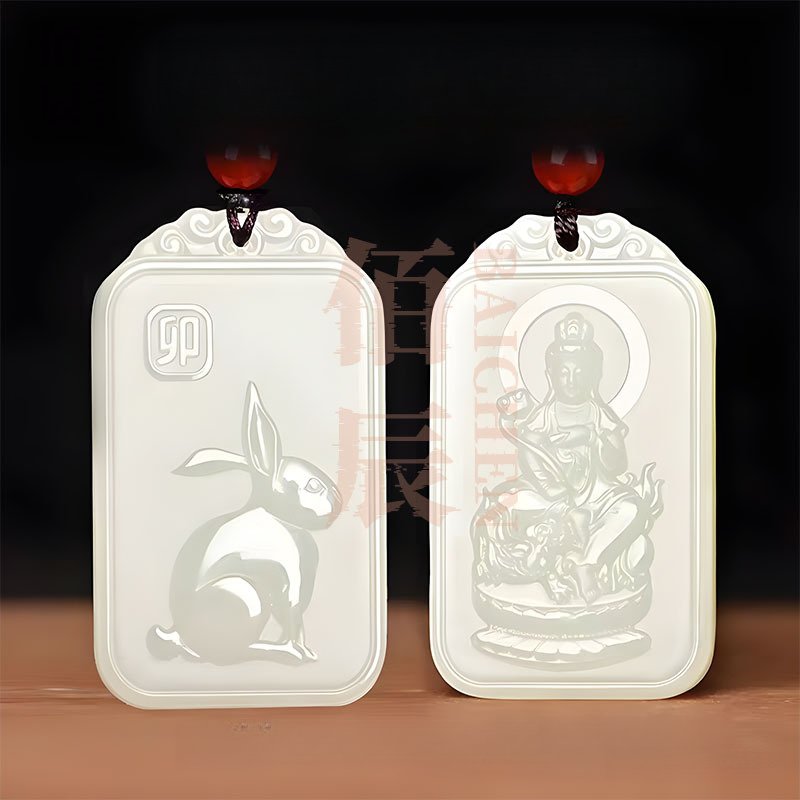
The color palette in minimalist Buddhist jewelry is typically subdued and understated. Earthy tones such as browns, beiges, and grays are popular, as they connect the jewelry to the natural world and evoke a sense of grounding. These colors also represent the simplicity and humility often associated with Buddhist teachings. White, which symbolizes purity and enlightenment, is another commonly used color. In some cases, a single color or a very limited combination of colors is used to create a harmonious and uncluttered visual effect. For instance, a white jade pendant on a brown silk cord can create a simple yet powerful aesthetic that draws the eye and the mind to the essence of the piece.
Restraint in Ornamentation
One of the hallmarks of minimalist design in Buddhist jewelry is the restraint in ornamentation. Instead of being covered in elaborate carvings or multiple gemstones, these pieces rely on the beauty of simplicity. A simple engraved line or a single small symbol may be the only form of decoration. For example, a plain metal bracelet with a tiny lotus flower engraved on it, barely noticeable at first glance, but upon closer inspection, reveals its profound symbolic meaning. This restraint not only gives the jewelry an air of elegance but also allows the wearer to focus on the spiritual significance rather than being distracted by excessive adornment.
4. How Minimalist Design Conveys “Zen – inspired 留白”
Creating a Sense of Space
The use of simple shapes, a limited color palette, and restraint in ornamentation creates a sense of space within the jewelry design. This open space, or 留白,gives the eye and the mind room to breathe. It is not crowded with details, allowing the viewer to engage with the piece on a deeper level. Just as in Zen meditation, where the mind is emptied of distractions, the open space in the jewelry design encourages a moment of stillness and reflection. For example, a pendant with a large, unadorned circular disk and a small, centered symbol creates a visual field where the negative space becomes as important as the positive elements, guiding the viewer’s attention to the core symbol and its meaning.
Encouraging Inner Reflection
Minimalist design in Buddhist jewelry serves as a trigger for inner reflection. The simplicity of the piece prompts the wearer or observer to look beyond the surface and contemplate the deeper spiritual meaning. The lack of elaborate decoration forces the mind to engage actively, filling the “empty space” with thoughts and insights related to Buddhist teachings. For instance, a plain wooden bead bracelet may seem ordinary at first, but as the wearer runs their fingers over the smooth beads, they may start to think about the impermanence of life, the connection to nature (represented by the wood), and the importance of simplicity in their spiritual journey.
Evoking a Feeling of Calm
The overall aesthetic of minimalist Buddhist jewelry, with its simple forms, subdued colors, and lack of excessive ornamentation, evokes a feeling of calm. In a world filled with visual clutter and sensory overload, these pieces offer a retreat into a realm of tranquility. The clean lines and uncomplicated designs create a sense of peace, much like the calmness experienced during meditation. A minimalist Buddhist ring with a single, smooth stone in a simple setting can bring a sense of serenity to the wearer, serving as a reminder to stay centered and peaceful in the midst of daily life.
5. Materials Used in Minimalist Buddhist Jewelry and Their Significance
Wood: Connecting with Nature
Wood is a popular material in minimalist Buddhist jewelry. It has a natural warmth and texture that connects the wearer to the natural world. In Buddhist philosophy, nature is often seen as a reflection of the Dharma, and using wood in jewelry can symbolize the interconnectedness of all beings. Different types of wood, such as sandalwood, are also valued for their fragrance, which can enhance the meditative experience. The simplicity of a wooden bead or a carved wooden pendant fits perfectly with the minimalist aesthetic, allowing the natural beauty of the wood to shine through and convey a sense of simplicity and harmony.
Stone: Enduring and Grounding
Stones, such as jade, agate, and quartz, are commonly used in minimalist Buddhist jewelry. Jade, for example, is highly regarded in many Asian cultures for its beauty, durability, and symbolic associations with purity, virtue, and longevity. Its smooth surface and often – muted colors make it an ideal material for minimalist designs. Agate, with its unique patterns, can add a touch of natural artistry while still maintaining a sense of simplicity. Stones provide a sense of grounding, much like the stability and endurance required on the spiritual path. A simple stone pendant or a bracelet made of stone beads can serve as a constant reminder of the unchanging nature of the Dharma.
Metal: Durability and Precision
Metals, especially silver and gold, are used in minimalist Buddhist jewelry for their durability and the precision with which they can be worked. Silver, with its cool luster, can be crafted into simple, elegant settings that enhance the beauty of the accompanying stones or symbols. Gold, on the other hand, is often associated with purity and enlightenment in Buddhist art. The precision of metalwork allows for the creation of fine details, such as a delicate engraved symbol on a metal band or a simple wire – wrapped stone. Metals can also be used to create the framework for minimalist jewelry, providing a sturdy and long – lasting base for the spiritual elements.
6. Symbolism in Minimalist Buddhist Jewelry
The Power of Simple Symbols
Minimalist Buddhist jewelry often uses simple symbols to convey profound meanings. The lotus flower, for example, is a frequently used symbol. In a minimalist design, a small, unadorned lotus flower carved on a pendant or engraved on a ring can represent purity, enlightenment, and the ability to rise above the worldly mire. The Dharma wheel, another important symbol, may be depicted in a simplified form, with just the basic shape and a few lines to represent the spokes. This simplicity does not detract from its significance but rather allows the viewer to focus more intently on its meaning as the turning of the wheel of Dharma, representing the spread of the Buddha’s teachings.
Subtle Representation of Buddhist Teachings
The use of simple symbols in minimalist Buddhist jewelry also serves as a subtle representation of Buddhist teachings. For example, a triangle – shaped pendant may symbolize the Three Jewels of Buddhism (the Buddha, the Dharma, and the Sangha). The triangle’s simplicity and geometric form make it a discreet yet powerful symbol. This subtlety allows the wearer to carry the teachings with them in a way that is not overly ostentatious but rather personal and meaningful. It also provides an opportunity for those who are interested in Buddhism to learn about the teachings through the jewelry, as they may be inspired to research the meaning behind the simple symbols.
7. The Role of “Zen – inspired 留白” in Modern Aesthetics
Standing Out in a Cluttered World
In a modern world filled with flashy and over – designed jewelry, minimalist Buddhist jewelry with its “Zen – inspired 留白” stands out. It offers a refreshing alternative to the mainstream, attracting those who seek a more meaningful and understated form of adornment. The simplicity of these pieces makes a statement in a different way, drawing attention through its quiet elegance rather than through loud and elaborate designs. It appeals to individuals who are looking for something that is not only beautiful but also has a deeper spiritual or philosophical connection.
Aligning with Contemporary Lifestyle
The minimalist design of Buddhist jewelry also aligns well with the contemporary lifestyle. In a fast – paced world, people are increasingly drawn to simplicity and minimalism as a way to reduce stress and find balance. Wearing a piece of minimalist Buddhist jewelry can serve as a reminder to slow down, be present, and focus on the essentials. It can be a wearable piece of mindfulness, fitting seamlessly into a modern wardrobe and daily routine while still carrying its spiritual significance.
8. Case Studies of Minimalist Buddhist Jewelry
Necklace Designs
A simple yet elegant necklace might consist of a single, large white jade pendant in a smooth, circular shape. The pendant is suspended from a thin, brown silk cord. The lack of any additional adornment on the pendant allows the natural beauty of the jade to shine through, and the brown cord provides a earthy contrast. The circular shape of the jade represents unity and the cyclical nature of life, while the white color symbolizes purity. Another example could be a necklace with a series of small, polished wooden beads, with a single silver – plated Dharma wheel charm. The simplicity of the wooden beads and the understated charm create a minimalist look that is both spiritual and stylish.
Bracelet Designs
A minimalist bracelet design could be a plain silver band with a small, engraved lotus flower on the outer surface. The silver band is smooth and unadorned except for the delicate lotus flower, which is barely visible from a distance but reveals its beauty upon closer inspection. This design combines the durability of silver with the symbolic power of the lotus flower. Another option is a bracelet made of a single strand of small, natural quartz beads, with a simple knot at each end. The transparency of the quartz beads and the simplicity of the knot create a sense of lightness and purity, reflecting the “Zen – inspired 留白” concept.
Ring Designs
A ring might feature a simple gold band with a tiny, inlaid jade stone in the center. The jade stone is uncut and retains its natural shape, adding a touch of organic beauty to the otherwise simple ring. The gold band represents purity and enlightenment, while the jade symbolizes virtue and longevity. Another ring design could be a silver ring with an engraved swastika (in its Buddhist context). The swastika is engraved in a simple, clean – lined manner, making it a powerful yet understated symbol of the Buddha’s path.
9. Craftsmanship in Minimalist Buddhist Jewelry
Precision in Creation
Crafting minimalist Buddhist jewelry requires a high level of precision. Since there are fewer elements, each one must be perfect. Whether it’s carving a small symbol on a metal surface or shaping a stone into a simple form, the slightest imperfection can be more noticeable. For example, when engraving a lotus flower on a pendant, the lines need to be clean and precise to convey the delicate nature of the flower. The jeweler must have a steady hand and a keen eye for detail to ensure that the simple design is executed flawlessly.
Attention to Detail
Despite the simplicity of the design, attention to detail is crucial in minimalist Buddhist jewelry. The finish of the materials, the way the elements are joined together, and the overall proportion of the piece all contribute to its quality. For instance, in a bracelet made of wooden beads, the holes through which the cord passes must be smooth to prevent the cord from fraying. The edges of the metal elements should be rounded and polished to provide a comfortable wearing experience. These small details may seem insignificant, but they make a significant difference in the overall aesthetic and durability of the jewelry.
10. Appreciating the Beauty of “Zen – inspired 留白” in Buddhist Jewelry
Appreciating the beauty of “Zen – inspired 留白” in Buddhist jewelry requires a shift in perspective. It’s not about the quantity of elements or the flashiness of the design but rather about the depth of meaning and the sense of tranquility that the piece evokes. When one takes the time to look closely at a minimalist Buddhist jewelry piece, they can discover the subtle nuances, the hidden symbols, and the profound spiritual significance that lies within. It’s a form of beauty that is both timeless and relevant, appealing to those who seek a deeper connection to their spiritual selves and a break from the chaos of the modern world.
11. Conclusion
“Zen – inspired 留白” in Buddhist jewelry offers a unique and profound way of expressing the essence of Buddhism through minimalist design. By embracing simplicity in shapes, color palettes, and ornamentation, these pieces create a sense of space, encourage inner reflection, and evoke a feeling of calm. The materials used, the symbolism incorporated, and the craftsmanship involved all contribute to the creation of jewelry that is not only aesthetically pleasing but also spiritually enriching. In a world that often values excess and complexity, minimalist Buddhist jewelry stands as a reminder of the beauty and power of simplicity, guiding us towards a more profound understanding of the “The Great Way is Simple” principle in Buddhist philosophy.
12. FAQs
Why is simplicity so important in Buddhist jewelry with “Zen – inspired 留白”?
Simplicity in Buddhist jewelry with “Zen – inspired 留白” is important because it reflects the Buddhist principle of “The Great Way is Simple.” It allows the wearer to focus on the spiritual significance of the piece without being distracted by excessive ornamentation. The simplicity also creates a sense of space for inner reflection and evokes a feeling of calm, much like the experience of meditation.
Can minimalist Buddhist jewelry be worn in modern, non – spiritual settings?
Yes, minimalist Buddhist jewelry can be worn in modern, non – spiritual settings. Its simple and elegant design makes it suitable for various occasions. In fact, it can add a touch of understated elegance to a modern outfit. Moreover, the spiritual significance of the jewelry can serve as a personal reminder of values like simplicity and mindfulness, even in non – spiritual contexts.
What are some common mistakes to avoid when creating minimalist Buddhist jewelry?
One common mistake is over – simplifying to the point where the symbolic meaning is lost. Another is not paying enough attention to detail, which can make the piece look poorly made. Also, using inappropriate or low – quality materials can detract from the overall aesthetic and spiritual feel of the jewelry.
How can I tell if a piece of minimalist Buddhist jewelry is of high quality?
High – quality minimalist Buddhist jewelry often shows precision in craftsmanship. The lines are clean, the surfaces are smooth, and the materials are of good quality. The symbolic elements are well – defined and the overall design is balanced. For example, in a metal – based piece, the metal should be free of scratches and the engraving should be sharp and clear. In a stone – based piece, the stone should be free of cracks and of good color and clarity.
Are there specific materials that are better for achieving a “Zen – inspired 留白” look in Buddhist jewelry?
Materials like wood, stone, and metal are commonly used to achieve a “Zen – inspired 留白” look. Wood provides a natural and warm touch, stone offers durability and a sense of grounding, and metal allows for precision in design. Earthy – toned materials such as brown wood, beige – colored stones, and silver or gold in simple settings are often ideal for creating the understated and calming aesthetic associated with “Zen – inspired 留白.”
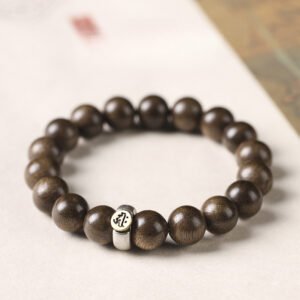
Buddha jewelry:Kalimantan Agarwood Wooden Prayer Beads of the Twelve Chinese Zodiac Signs and the Eight Great Guardian Deities – DIY Zodiac Year Guardian Buddha Bracelet
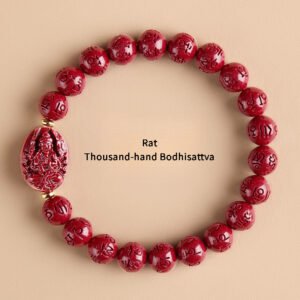
$85.71Original price was: $85.71.$68.57Current price is: $68.57. Select options This product has multiple variants. The options may be chosen on the product pageBuddha jewelry:Cinnabar Chinese Zodiac Birth Buddha Six-Syllable Mantra Purple Gold Sand Bracelet, Eight Great Guardian Deities Fortune-Transforming Bracelet
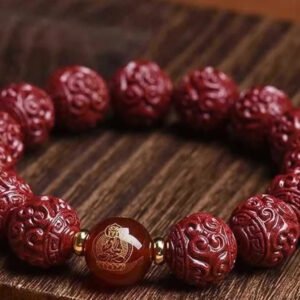
$34.29Original price was: $34.29.$27.43Current price is: $27.43. Select options This product has multiple variants. The options may be chosen on the product pageBuddha jewelry:Raw cinnabar bracelet, zodiac Buddha bracelet, twelve zodiac beads, red agate, eight guardians
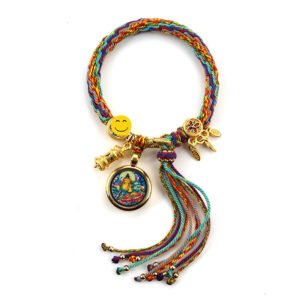
$132.85 – $218.57Price range: $132.85 through $218.57 Select options This product has multiple variants. The options may be chosen on the product pageBuddha jewelry:Tibetan-style Thangka Gau Box Pendant with Eight Great Guardian Deities, Twelve Chinese Zodiac Signs and Zodiac Year Guardian Buddhas
$21.43Original price was: $21.43.$17.14Current price is: $17.14. Select options This product has multiple variants. The options may be chosen on the product page